August 28, 2026 - 128 views
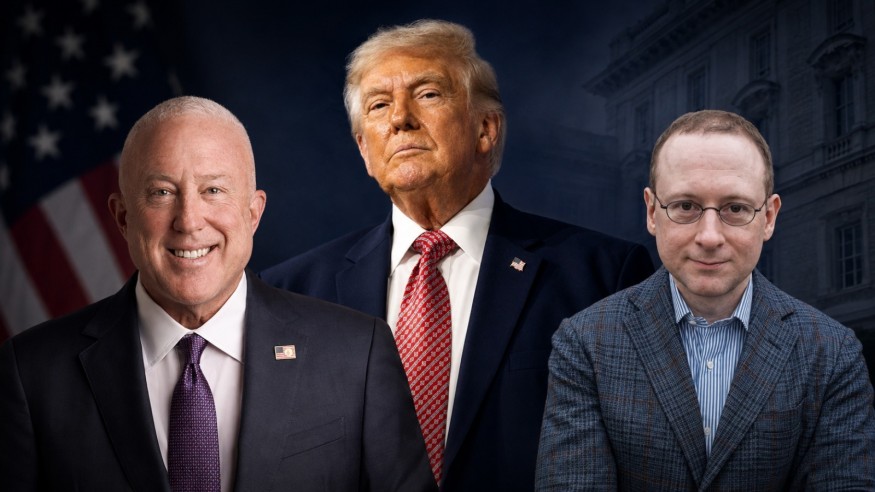
Trump’s ambassador invoked American funding and threatened Ghent University’s US relationships. Days later, Nathan Cofnas’s preventive suspension was lifted.
American taxpayer power was deployed to protect Nathan Cofnas.
When Ghent University suspended the self-described “race realist”, US Ambassador to Belgium Bill White did more than object. He invoked the American government’s financial support for overseas universities, branded Ghent an undesirable partner and announced that Washington was reviewing “any relationships” it had with the institution.
Ghent reportedly had two ongoing US Department of Defense grants worth a combined $869,000. Those were American tax dollars—and the ambassador had expressly placed US-funded relationships on the line.
Days later, Ghent lifted Cofnas’s seven-day preventive suspension. White celebrated the outcome, praised the university’s rector and announced that he looked forward to continuing America’s relationship with Ghent.
There is no need for conspiracy theories. The intervention was public. The financial leverage was explicit. The result followed.

What Washington put on the table
White’s intervention was unusually direct. He called Cofnas’s suspension retaliation against an American scholar and described institutions that engage in or reward “scapegoating mob behavior” as undesirable US partners. Then came the material warning: the Trump administration was reviewing its relationships with Ghent.
That was not an abstract reference to academic freedom. Inside Higher Ed reported that Ghent was receiving two current US Defense Department grants with a combined value of $869,000. The ambassador’s words therefore carried the weight of an administration capable of affecting funding, research partnerships and institutional access.
After the suspension was lifted, White wrote that he had spoken “with all parties”, welcomed the agreement allowing Cofnas to complete his appointment and thanked Rector Petra De Sutter for listening to those calling for the protection of academic freedom. Cofnas, in turn, thanked the ambassador and said White’s support had helped to bring about what he called a just outcome.
The sequence matters. Washington identified a personnel decision at a Belgian university as a matter of US interest, pointed to the wider relationship and then publicly embraced the result.
Whom the American state chose to protect
This was the power of the American state being used on behalf of a man whose published racial politics contend that Black people are innately less intelligent and would virtually disappear from elite positions under his conception of meritocracy.
Cofnas calls this “race realism”. Its practical meaning is a racial hierarchy in which existing Black achievement can be dismissed as the product of lowered standards rather than ability.
In his own essay, A Guide for the Hereditarian Revolution, Cofnas wrote that under what he describes as a meritocracy, the proportion of Black professors at Harvard would approach zero and Black people would disappear from almost all prominent positions outside sport and entertainment. He argued that acceptance of hereditarianism among elites could dismantle the existing liberal order.
That ideological framework is inseparable from the way his allegations about Professor Jason Arday travelled. Questions about academic work became a wider assault on Black advancement, diversity and the legitimacy of Black achievement in elite institutions.
Yet when Cofnas’s own employment came under scrutiny, the response was immediate. An ambassador intervened. American-funded relationships were placed under review. The diplomatic weight of the United States was brought to bear.
One man encountered silence. The other received a superpower.
Professor Jason Arday received no comparable protection. While a Black British academic endured the destruction of his reputation and career, Britain’s institutional leadership remained conspicuously absent. When the position of the white American who pursued him was threatened, Washington moved within days.
There was no comparable British diplomatic intervention for Arday. No warning that institutional relationships were under review. No senior state official placing the prestige or resources of the British government behind his protection.
One man encountered institutional silence. The other received the protection of a superpower.
The contrast does not require every allegation against Arday to be dismissed, nor does it require every concern about Ghent’s handling of Cofnas to be ignored. It requires only that the distribution of institutional power be seen clearly. The person whose work became the object of a global campaign stood largely alone. The person who drove that campaign acquired the public support of the American state when consequences reached him.
What the record proves—and what it does not
Ghent has not said that US pressure determined its decision, and no evidence presently establishes a private bargain. The university has confirmed contact with the ambassador but says its preliminary disciplinary inquiry remains ongoing.
The lifting of the seven-day preventive suspension was not a complete exoneration. Cofnas has reportedly been required to work remotely for three months, has been barred from teaching during that period and will spend only 60 per cent of his working time on the postdoctoral project. Those restrictions matter and should not be obscured.
But neither should the intervention be minimised. The established facts are serious enough: the ambassador invoked taxpayer-funded relationships, threatened their continuation, intervened personally and then claimed the resulting decision as a victory. Cofnas himself credited the ambassador’s support with helping to produce the outcome.
The important question is not whether a secret deal can be proved. It is why the financial and diplomatic power of the United States was mobilised so publicly and so quickly for this particular academic—and what that reveals about whose freedom, reputation and employment powerful states choose to defend.
US tax dollars did not merely fund research at Ghent University. Their possible withdrawal became an instrument of political pressure—and Nathan Cofnas was its beneficiary.
Sources: Inside Higher Ed, 28 August 2026; Times Higher Education, 20 August 2026; Nathan Cofnas, “A Guide for the Hereditarian Revolution”.